Handicraft Ceramic: How to Tell Real Craftsmanship from Mass-Produced Imitations
The term handicraft ceramic is everywhere today — in shops, online listings, and souvenir markets. But not all ceramics labeled “handicraft” are truly handmade. For buyers who care about authenticity, understanding the difference matters more than ever.
Real handicraft ceramic is defined not by marketing language, but by process, skill, and time.
What “Handicraft Ceramic” Actually Means

Handicraft ceramic refers to ceramic products created primarily by hand, using traditional or semi-traditional techniques. This includes hand shaping, wheel throwing, manual glazing, and kiln firing controlled by experienced artisans.
In genuine handicraft ceramic production:
-
Each piece is formed individually, not pressed from industrial molds
-
Artisans make decisions during shaping, not after production
-
Small variations are expected and respected
If every item looks perfectly identical, it is likely not true handicraft ceramic.
The Biggest Misconception Buyers Have
Many buyers assume that “hand-finished” equals “handmade.” This is incorrect.
A common factory process involves machine-molded ceramics that are later painted or glazed by hand. While this may involve some manual labor, it does not qualify as true handicraft ceramic.
The key difference lies in who controls the form:
-
In handicraft ceramic, the artisan shapes the form
-
In mass production, the machine defines the form
This distinction affects not only appearance, but also durability, weight balance, and tactile quality.
Why Handicraft Ceramic Feels Different
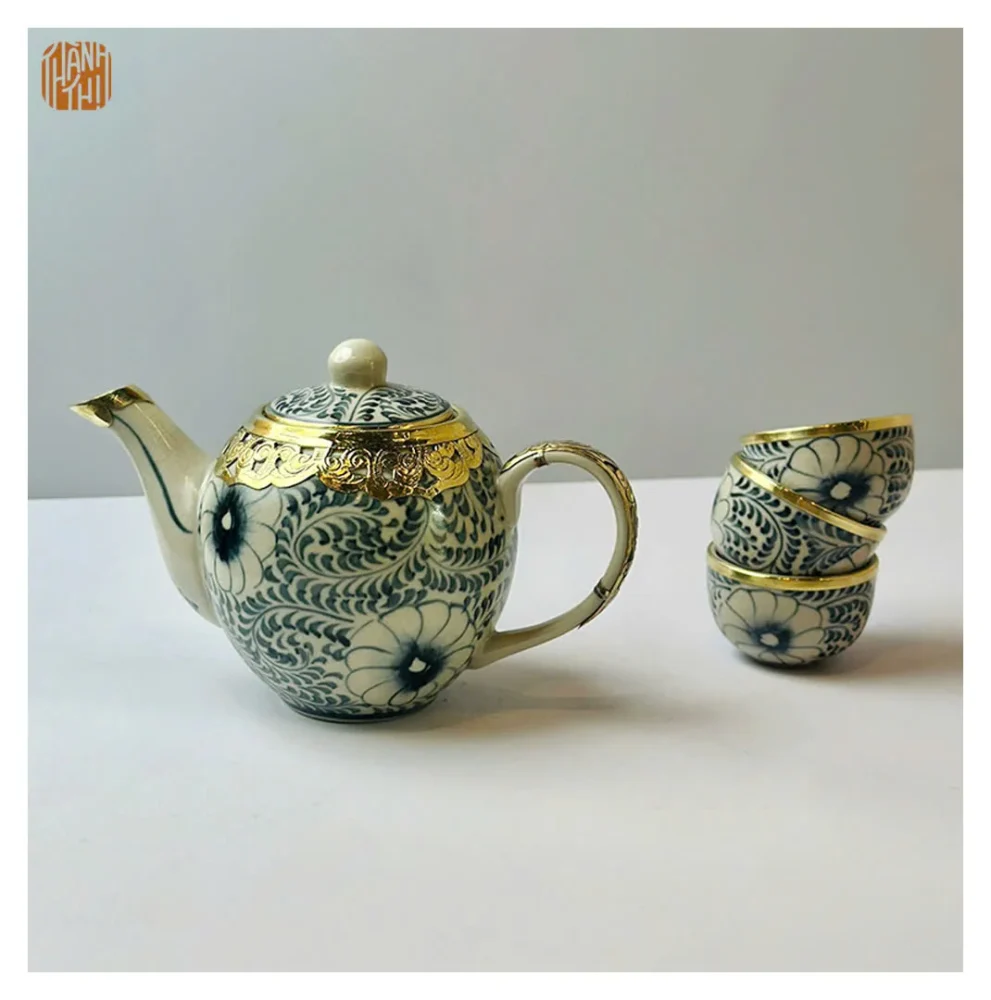
People often describe handicraft ceramic as “warm” or “alive,” even if they cannot explain why. This reaction comes from subtle physical qualities.
Handmade ceramic surfaces are not perfectly flat under magnification. The micro-texture created by hand shaping changes how light reflects and how the piece feels when touched.
Weight distribution is another factor. Handicraft ceramic items often feel more balanced, especially bowls, cups, and vases, because artisans adjust thickness intuitively during shaping.
These characteristics cannot be replicated by automated systems.
Glazing in Handicraft Ceramic Production
In true handicraft ceramic, glazing is not just a decorative step — it is part of the creative process.
Artisans mix, apply, and layer glazes manually. During firing, these glazes react unpredictably with heat and clay composition, producing unique results.
This is why no two handicraft ceramic pieces ever have exactly the same color depth or glaze flow, even within the same design line.
Durability: A Quiet Advantage
Another blind spot for buyers is durability. Many assume handcrafted means delicate. In reality, well-made handicraft ceramic is often stronger than factory ceramics.
Because artisans understand stress points, they reinforce rims, bases, and joints naturally during shaping. Pieces are fired at appropriate temperatures to ensure structural integrity, not speed.
As a result, authentic handicraft ceramic ages slowly and gracefully instead of chipping or cracking prematurely.
Who Should Choose Handicraft Ceramic?
Handicraft ceramic is ideal for:
-
Buyers seeking authenticity over perfection
-
Interior designers wanting unique visual texture
-
Collectors who value process and origin
-
Shops that want products with a real story
It is especially relevant in destinations known for craft traditions, where customers actively look for items made by local artisans rather than factory imports.
Handicraft Ceramic Is About Trust
Buying handicraft ceramic is ultimately an act of trust — trust in the maker, the process, and the time invested in each piece. It asks buyers to look beyond labels and focus on how an object is made, not just how it looks.
When you understand what true handicraft ceramic really is, the difference becomes impossible to ignore.