Handicraft Ceramic: How Vietnamese Craftsmanship Balances Heritage and Contemporary Design
Craft traditions survive not simply because they remain unchanged, but because they continue to find meaning in new generations.
This idea is particularly relevant to handicraft ceramic. Vietnamese ceramics have a long relationship with everyday life, architecture, decoration, and cultural expression. Yet contemporary ceramic design does not need to reproduce the past exactly.
Instead, it can reinterpret traditional knowledge through modern forms, colors, proportions, and lifestyles.
The result is a fascinating meeting point between heritage and contemporary creativity.
Tradition Is More Than an Old Appearance

When people think about traditional ceramics, they may immediately imagine familiar patterns, historical shapes, or recognizable decorative motifs.
But craftsmanship is much deeper than visual appearance.
It can include an understanding of clay, firing, surface treatment, proportion, and the physical behavior of ceramic materials.
These elements can continue to influence modern ceramic design without requiring every finished piece to look historical.
Heritage Can Survive Through Technique
An artisan may use contemporary shapes while still relying on knowledge developed through hands-on ceramic practice.
The visual language changes.
The relationship with the material remains.
This distinction allows handicraft ceramic to evolve naturally instead of becoming frozen in one particular period.
Why Contemporary Forms Matter
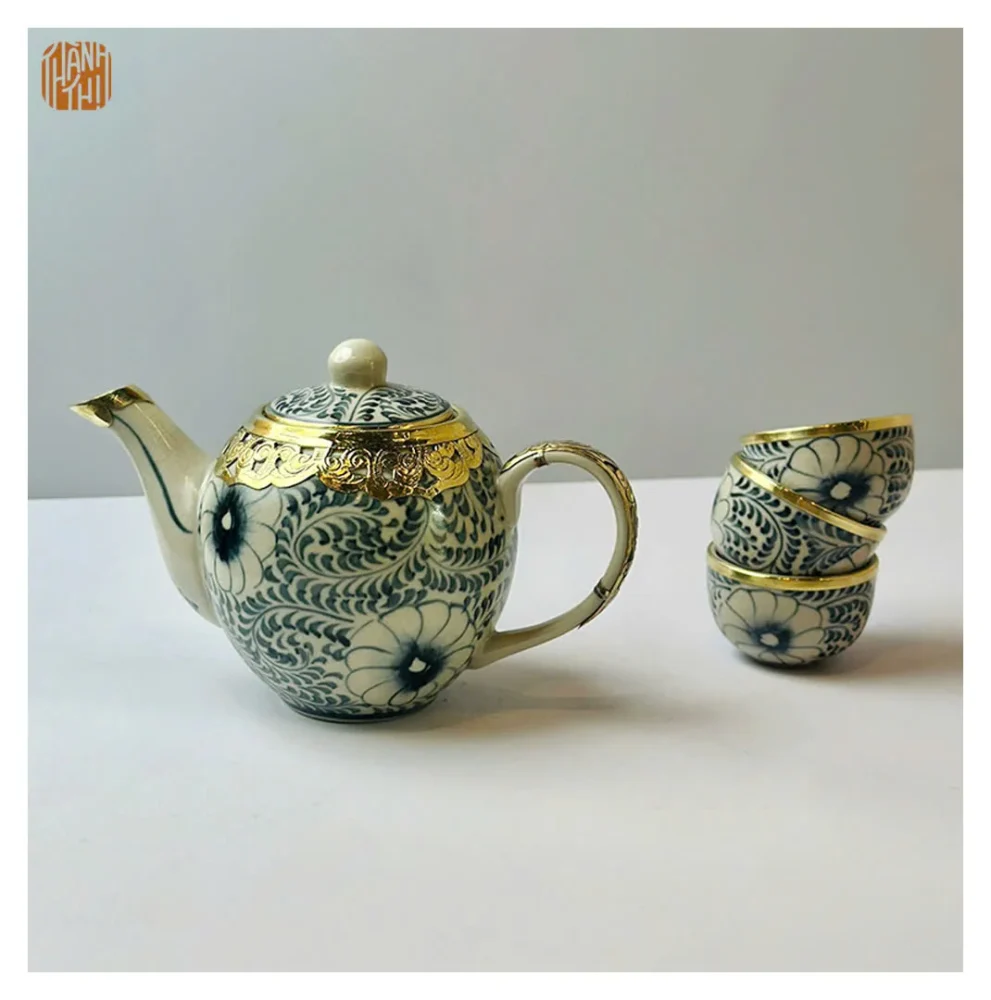
Modern lifestyles have changed the way people interact with objects.
Homes may have smaller kitchens. Dining habits can be more casual. Interior design often favors simpler silhouettes and versatile objects.
Ceramic design responds to these changes.
A contemporary handmade piece may use a restrained form that fits naturally into a modern apartment while still carrying the tactile qualities associated with traditional craftsmanship.
This is not a rejection of heritage.
It is an interpretation of heritage for a different generation.
The Beauty of Cultural Translation
One of the most interesting aspects of Vietnamese craft is the ability to communicate cultural identity without relying on obvious symbols.
A ceramic object can feel distinctly connected to its place through:
- Material choices
- Surface character
- Color relationships
- Handmade construction
- Proportional language
- Relationship with local aesthetics
This creates a more subtle form of cultural expression.
Instead of telling the viewer exactly what to see, the object allows its character to emerge gradually.
When Imperfection Becomes Contemporary
Handmade surfaces can contain small variations that would rarely appear in industrial products.
A glaze may move differently across each piece. A shape may contain slight asymmetry. Texture can change subtly across the surface.
In a contemporary design context, these qualities can create visual warmth.
Perfect uniformity often communicates precision.
Handmade variation communicates individuality.
Both have their place, but the latter can make an interior feel more human.
Designing for Modern Spaces
Contemporary ceramic design often benefits from restraint.
A simple silhouette can allow the material itself to become the main feature.
Imagine a ceramic object placed against a plain wall, beside natural wood, or on a minimalist dining table. Without excessive decoration, the viewer can focus on its proportions, surface, and relationship with surrounding materials.
This approach makes Vietnamese handicrafts easier to integrate into international interiors.
The cultural identity remains present without overwhelming the environment.
The Artisan as Both Maker and Designer
The role of an artisan is not limited to executing an existing pattern.
In contemporary craft, the maker can also become a designer.
They make decisions about scale, shape, surface, balance, and how an object should interact with people and spaces.
This creative responsibility allows traditional craftsmanship to become an evolving discipline.
Why This Balance Matters for Vietnamese Ceramics
If traditional craftsmanship were reproduced without adaptation, it could become disconnected from contemporary life.
If modern design completely abandoned traditional knowledge, something equally valuable could disappear.
The most compelling work often exists between these two extremes.
It respects the knowledge of the past while allowing new ideas to emerge.
That balance gives handicraft ceramic its lasting relevance.
Discovering Craft Through a Contemporary Perspective
At Thanh Thi Pottery, handmade ceramics can be appreciated not only as representations of Vietnamese tradition but also as examples of how craft continues to evolve.
The most meaningful connection to heritage does not always come from copying historical objects.
Sometimes, it comes from carrying forward the principles behind them while creating something appropriate for the present.
Craft That Continues to Evolve
A living craft tradition should have room for experimentation.
Forms can change.
Colors can develop.
Functions can adapt.
Aesthetic preferences can move in new directions.
Yet the relationship between human hands and material remains at the center.
That is what makes handicraft ceramic more than decorative merchandise.
It is a continuing conversation between what has been learned, what is being imagined, and what future generations may create.
Vietnamese ceramic craftsmanship does not need to choose between heritage and modernity.
Its greatest strength may be its ability to let both exist in the same object.